

Used needles are a hazard to family members, roommates, garbage collectors and recycling workers. Disposing of them properly takes almost no effort once you have the right container, and most communities in Canada have free or low-cost ways to get rid of full containers. Here is how.
- Put used needles straight into a puncture-resistant sharps container; never in the regular garbage or recycling.
- Pharmacies sell sharps containers, and many accept full ones for disposal.
- Do not recap, bend or break needles before disposal.
- A needlestick injury from someone else’s needle needs prompt medical assessment.
Use a proper sharps container
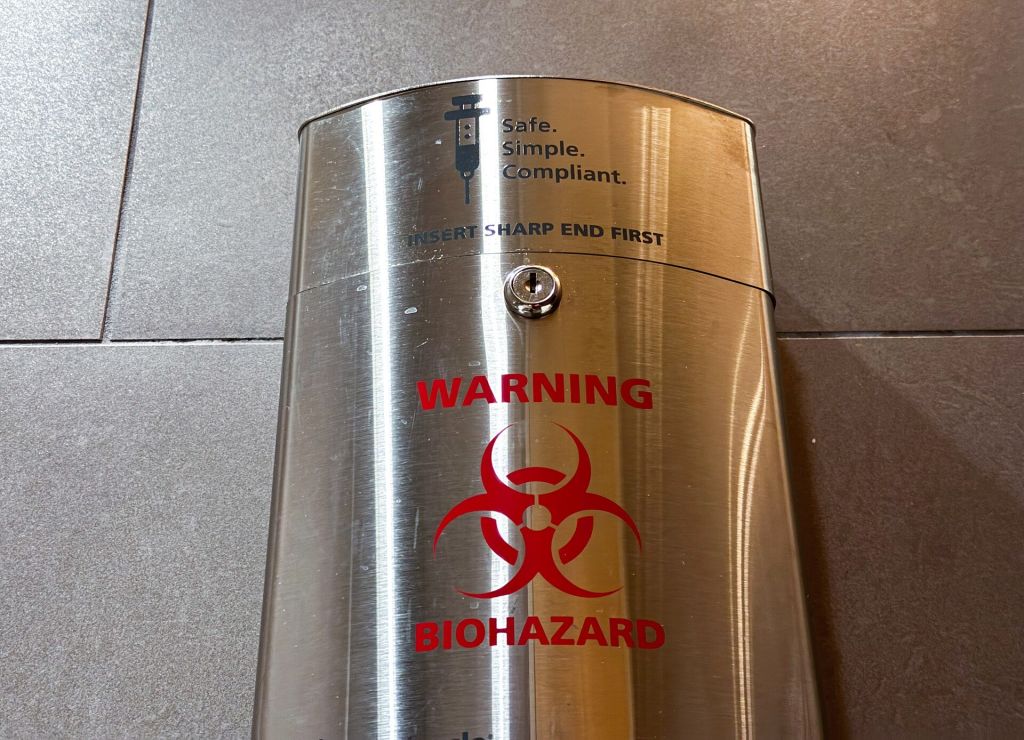
A sharps container is a rigid, puncture-resistant box with a lid that locks when full. Pharmacies across Canada sell them in several sizes, and harm-reduction programmes often provide them free. Keep it close to where you inject so the needle goes straight in, and out of reach of children and pets.
If you do not have a sharps container
A temporary option is a heavy plastic bottle with a screw-on lid, such as a laundry detergent bottle, clearly labelled “SHARPS – DO NOT RECYCLE”. Get a proper container as soon as you can and ask your pharmacy or municipality how they want home-made containers handled; rules differ by area.
What not to do
- Do not put loose needles in household garbage or recycling.
- Do not flush needles down the toilet.
- Do not recap a used needle; most needlestick injuries happen while recapping.
- Do not bend, break or cut needles.
- Do not overfill containers; seal them when they reach the fill line.
Where to drop off full containers
Options vary by province and municipality. Common ones are:
- Pharmacies: many accept sealed sharps containers, sometimes through provincial take-back programmes.
- Municipal hazardous waste depots and collection days.
- Harm-reduction and public-health programmes, which often exchange full containers for new supplies.
Call your pharmacy or check your municipality’s website for local rules.
If you are pricked by someone else’s used needle, let the wound bleed gently, wash it with soap and water, do not squeeze or scrub hard, and go to an emergency department or urgent-care clinic promptly. Preventive treatment for HIV works best when started within hours, and hepatitis B can also be prevented after exposure.
Travelling with needles
When travelling, carry a small portable sharps container rather than wrapping used needles in tissue or bags.
Vials and other supplies
Empty glass vials can go into the sharps container or be disposed of according to local rules for medical waste. Used swabs and packaging can go in household garbage. Expired or unwanted medicines can be returned to many pharmacies.
Children, pets and shared homes
Store sharps containers and any unused needles up high or locked away, never on a bathroom counter or in a bag a child might open. In shared homes, let others know where the container is so nobody reaches into a bin or drawer without warning. If a child is pricked by a used needle, treat it as a needlestick injury and seek medical care promptly.
Why it matters
Discarded needles injure sanitation workers every year and can expose them to blood-borne viruses. Proper disposal protects them, your household and your community, and it costs only a few dollars.
Health and bloodworkIntramuscular injection hygieneRead guide
Frequently asked questions
Can I throw needles in the garbage if they are in a bottle?
Rules vary by municipality. Many ask for sealed sharps containers to go to a pharmacy or depot instead. Check local rules.
Do pharmacies take used needles?
Many do, in sealed sharps containers. Call ahead to confirm.
Should I recap a needle before disposal?
No. Put it straight into the sharps container uncapped.
Educational information only. Nothing here is medical advice or a recommendation to use any product. Anabolic steroids are Schedule IV under the Controlled Drugs and Substances Act. Talk to a doctor and get bloodwork before and after using any compound.