







Most people never come close to their natural muscle-building potential, usually because of inconsistent training, too little protein or poor sleep, not because they lack drugs. The methods below are boring compared with what social media promotes, but they work, they are free or cheap, and they carry no hormonal risk.
- Progressive overload, gradually doing more over time, is the main driver of muscle growth.
- Around 1.6 to 2.2 g of protein per kg of body weight a day supports most lifters.
- A small calorie surplus builds muscle with less fat than a large one.
- Sleep, consistency and creatine monohydrate round out the essentials.
1. Train with progressive overload
Muscles grow when they are challenged beyond what they are used to. Track your lifts and aim to add weight, reps or sets over time. Most research suggests training each muscle about twice a week with roughly 10 to 20 hard sets per week works well for most people. Sets should be taken close to failure, leaving one to three reps in reserve.
2. Choose effective exercises
Compound movements such as squats, deadlifts, presses, rows and pull-ups train several muscles at once. Add isolation exercises for areas you want to bring up. Good technique lets you train harder for longer without injury; see warming up for heavy lifting.
3. Eat enough protein
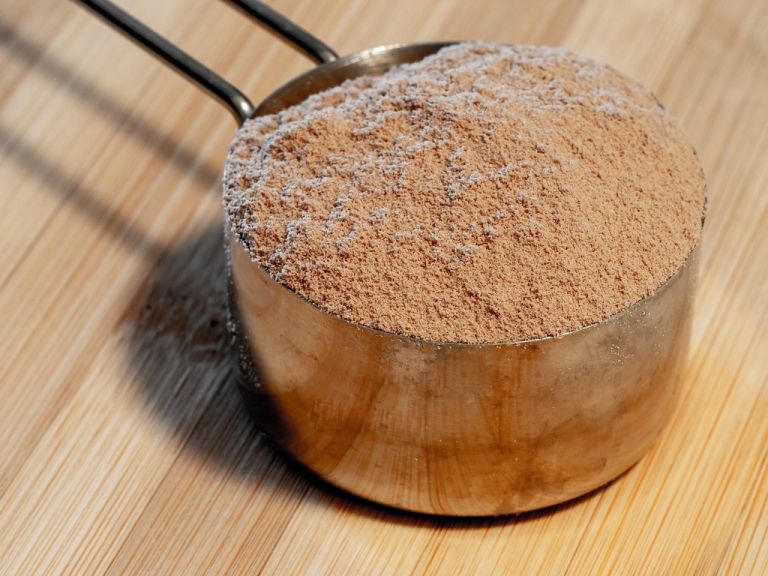
Spread protein over three to five meals, with around 0.3 to 0.4 g per kg of body weight per meal. Good sources include chicken, fish, eggs, Greek yogurt, cottage cheese, lean beef, tofu, lentils and protein powder. See our high-protein meal plan.
4. Eat enough overall
Building muscle needs energy. A surplus of roughly 200 to 300 calories a day supports growth with limited fat gain for most people. Beginners and people returning after a break can often build muscle even at maintenance. Our guide to counting macros explains how to set targets.
5. Sleep
Seven to nine hours of sleep supports recovery, hormone production and training performance. Sleep restriction reduces muscle gain and increases fat gain in studies. See deep sleep and recovery.
6. Use the supplements that work
| Supplement | Evidence |
|---|---|
| Creatine monohydrate | Strong: more strength and lean mass |
| Protein powder | Convenient way to hit protein targets |
| Caffeine | Improves training performance for many people |
| Vitamin D | Useful if deficient |
| “Test boosters” | Little or no evidence |
Common mistakes that stall natural progress
- Program hopping every few weeks before any programme has time to work.
- Training too far from failure, so sets never provide enough stimulus.
- Eating “clean” but not enough, especially protein and total calories.
- Short or irregular sleep.
- Not tracking anything, so progress, or the lack of it, goes unnoticed.
7. Recover and deload
Muscles grow between sessions. Plan easier weeks every four to eight weeks of hard training, manage stress and listen to persistent joint pain.
8. Be patient and consistent
Natural muscle gain is fastest in the first year of serious training and slows after that. Consistency over years beats any short burst of effort.
Three or four full-body or upper-lower sessions, protein at every meal, a small surplus, seven-plus hours of sleep and creatine daily. Review progress every four weeks.
Training and recoveryCreatine vs steroids: the real scienceRead guide
Frequently asked questions
How much muscle can I build naturally?
Beginners often gain several kilograms in the first year; progress slows after that.
Do I need supplements to build muscle?
No. Training, food and sleep are what matter. Creatine and protein powder make it easier.
How many times a week should I train?
Training each muscle about twice a week suits most people.
Educational information only. Nothing here is medical advice or a recommendation to use any product. Anabolic steroids are Schedule IV under the Controlled Drugs and Substances Act. Talk to a doctor and get bloodwork before and after using any compound.