


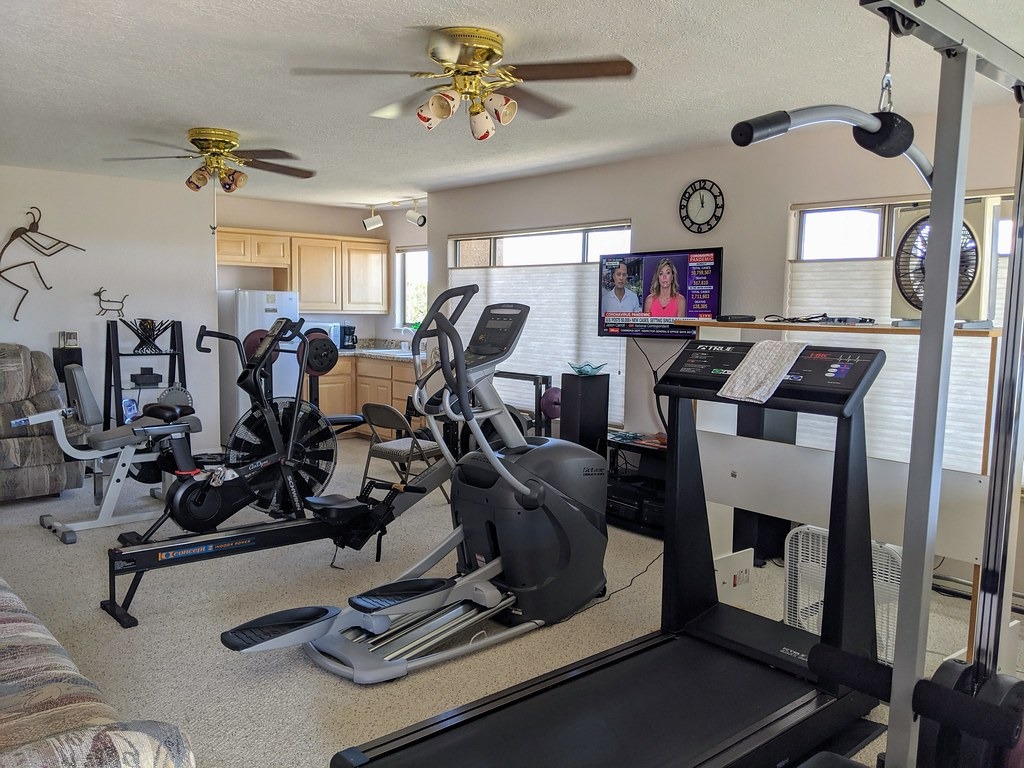
A home gym removes the commute, the wait for equipment and the monthly fee, and for many people it is the difference between training consistently and not. Canadian homes come with their own considerations: cold garages, basements with low ceilings and long winters. Here is how to build a setup that lasts.
- A rack, barbell, plates, adjustable bench and flooring cover most strength training needs.
- Buying used equipment can save a lot; inspect it carefully.
- Check ceiling height and floor strength before buying a rack.
- Cold garages need extra warm-up time and protection for equipment from rust.
The essentials
| Item | Why | Tips |
|---|---|---|
| Power rack or squat stands | Safe squatting and pressing alone | Choose one with safety arms or straps |
| Barbell | The core tool | Look for good knurling and spin |
| Plates | Load progression | Bumper plates are quieter and floor-friendly |
| Adjustable bench | Pressing and rows | Stable, with little wobble |
| Flooring | Protects floor and equipment | Rubber stall mats are inexpensive |
| Adjustable dumbbells | Accessories in little space | Check how quickly they adjust |
Nice to have
A pull-up bar (often built into the rack), resistance bands, a landmine attachment, a cable or pulley system, and a rowing machine or bike for cardio. Add pieces as your training shows what you actually use.
Space planning
- Ceiling height: measure before buying a rack, and leave room for overhead pressing or pull-ups. Basements often need a shorter rack.
- Floor: concrete basements and garages handle weight well; upper floors need care with heavy loads and dropping weights.
- Footprint: allow space on both sides of the barbell to load plates.
- Noise: bumper plates and thick mats reduce noise for neighbours and family.
Buying used
Online marketplaces across Canada are full of barely used equipment, especially in late winter and spring. Check welds and bolts on racks, straightness of barbells (roll them on a flat floor), cracks in bumper plates and stitching on benches. Cast iron plates rarely wear out.
Training in a cold garage
Unheated garages can drop well below freezing. Cold makes muscles and tendons stiffer, so extend your warm-up and dress in layers; see warming up for heavy lifting. Chalk and grip suffer in the cold too. A small, safely installed heater and good insulation make a big difference. Wipe down bars and plates to prevent rust from condensation, and consider a dehumidifier.
Always use safety arms or straps for squats and bench presses, collars on the bar, and leave a rep in reserve on heavy sets. Tell someone when you train alone.
Starter setups by budget
- Tight budget: adjustable dumbbells, a bench, resistance bands and a doorway pull-up bar.
- Mid-range: squat stands, barbell, iron plates, bench and rubber mats.
- Full setup: power rack with pull-up bar, barbell, bumper plates, bench, dumbbells, mats and a bike or rower.
Make it a place you want to train
Good lighting, a mirror for technique checks, ventilation and a place for a speaker or screen help consistency. A whiteboard for your programme keeps progress visible.
Training and recoveryNatural ways to build muscleRead guide
Frequently asked questions
What is the first piece of equipment to buy?
Adjustable dumbbells or a rack and barbell, depending on space and budget.
Is used gym equipment worth it?
Often yes, especially plates and racks. Inspect it carefully.
Can I lift heavy in an apartment?
Yes with care: thick flooring, bumper plates, no dropping and attention to floor load limits.
Educational information only. Nothing here is medical advice or a recommendation to use any product. Anabolic steroids are Schedule IV under the Controlled Drugs and Substances Act. Talk to a doctor and get bloodwork before and after using any compound.