






For decades the gym rule was simple: low reps for strength, eight to twelve for size, high reps for “tone”. Research over the last ten years has rewritten most of that. Muscle grows across a surprisingly wide range of loads, as long as sets are hard enough. What changes with the rep range is strength, joint stress, time and how miserable the set feels.
- Sets of roughly 5 to 30 reps build similar muscle when they end close to failure.
- Heavy loads build more maximal strength, because strength is partly a skill of lifting heavy.
- Very light loads, below about 30 percent of your best single, start to lose effectiveness.
- Mixing ranges by exercise is the most practical approach: heavier on big compounds, moderate to high on isolation work.
Where the 8 to 12 rule came from
The classic “hypertrophy zone” grew out of older coaching manuals and a few studies comparing heavy and moderate loads. It was never a hard boundary. Muscle fibres do not count reps; they respond to tension and to how many fibres are recruited and fatigued. Near the end of a hard set, almost every fibre in the muscle is working, whether the set lasted 6 reps or 25.
What the studies found
Heavy versus light, both to failure
Brad Schoenfeld and colleagues pooled studies in 2017 that compared low-load training (below about 60 percent of a one-rep max) with high-load training, with sets taken to failure. Muscle growth was similar. Strength gains favoured the heavy groups.
How light is too light
A 2018 study by Lasevicius and colleagues compared loads of 20, 40, 60 and 80 percent of maximum. The 40, 60 and 80 percent groups grew similarly; the 20 percent group grew noticeably less. So “light works” has a floor.
Effort is the common thread
Sets that stop far from failure build less muscle, whatever the load. A set of 20 that stops at 12 because the burn got uncomfortable is mostly wasted. Sets ending within about zero to four reps of failure do the work.
| Rep range | Typical load | Strengths | Downsides |
|---|---|---|---|
| 3 to 6 | 80 to 90% of max | Best for strength, efficient sets | More joint stress, longer rests, harder to judge effort |
| 6 to 12 | 65 to 80% of max | Good balance of tension, volume and time | Can feel monotonous |
| 12 to 20 | 50 to 65% of max | Easy on joints, good for isolation work | Burning and breathing limit effort before muscle does |
| 20 to 30 | 35 to 50% of max | Useful around injuries | Very uncomfortable, slow, easy to stop short |
How to choose for each exercise
The best rep range is the one that lets you reach real effort safely on that movement:
- Squats, deadlifts, presses and rows: 4 to 10 reps. Heavier work builds strength, and very high-rep squats tend to fail on breathing and technique before the legs are spent.
- Machines and cables: 8 to 15 reps. They are stable, so you can safely push close to failure.
- Isolation work for arms, calves, side delts: 10 to 20 reps. Small muscles, small joints and less systemic fatigue.
- Around a sore joint: lighter loads for 15 to 25 reps often let you keep training the muscle while the joint settles.
Most lifters grow well on about 10 to 20 hard sets per muscle group each week, spread over two or more sessions. Rep range is a secondary choice inside that weekly volume.
Does enhanced training change this?
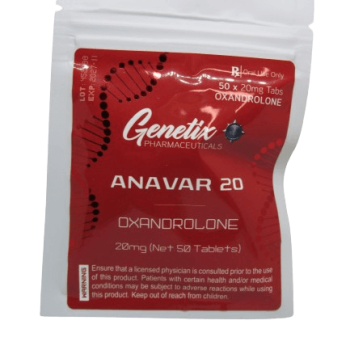
Anabolic compounds speed up protein synthesis and recovery, so users can often handle more weekly volume. They do not change the basic rule that sets need to be hard. One caution: strength can rise faster than tendons adapt, so many experienced users keep heavy singles and triples rare and do most of their work in moderate ranges to protect connective tissue.
A simple template
| Exercise slot | Sets x reps | Effort |
|---|---|---|
| Main compound lift | 3 x 5 to 8 | 1 to 3 reps in reserve |
| Second compound | 3 x 8 to 12 | 1 to 2 reps in reserve |
| Machine or cable | 3 x 10 to 15 | 0 to 2 reps in reserve |
| Isolation finisher | 2 to 3 x 12 to 20 | Last set to failure |
Progress by adding reps within the range, then adding weight and dropping back to the bottom of the range. That simple double progression works for years.
Frequently asked questions
Is light weight and high reps good for cutting?
No. Keep lifting heavy during a diet; it is the strongest signal to keep muscle. Fat loss comes from the calorie deficit, not the rep range.
Can I build muscle only with heavy triples?
You can, but you need many sets to get enough volume, and joints take a beating. Most people do better with a mix.
Do I need to change rep ranges every few weeks?
Not to “confuse” muscles. Changing ranges is useful for managing fatigue and keeping training interesting, but consistent progressive overload matters more.
Why do high-rep sets feel harder than heavy ones?
Metabolic by-products build up and cause burning and breathlessness. It feels worse but is not more effective unless you push through to genuine effort.
Educational information only. Nothing here is medical advice or a recommendation to use any product. Anabolic steroids are Schedule IV under the Controlled Drugs and Substances Act. Talk to a doctor and get bloodwork before and after using any compound.